Women in St Alfege Church
We are pleased to share some of the many extraordinary cast of characters connected to the church over time, uncovered as part of Heart of Greenwich - Place and People project.
Please come back regularly to this page to check for updates as we carry out more research and unfold more stories.
Mary Tudor
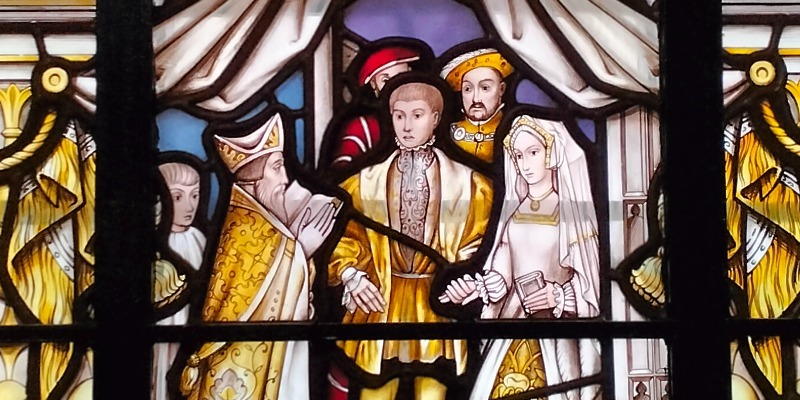
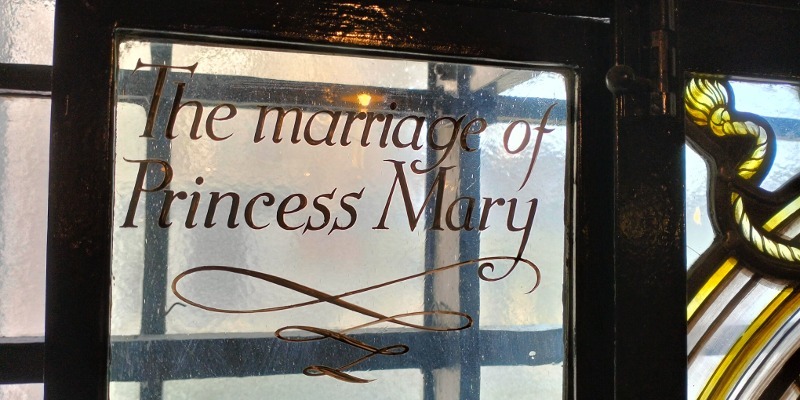
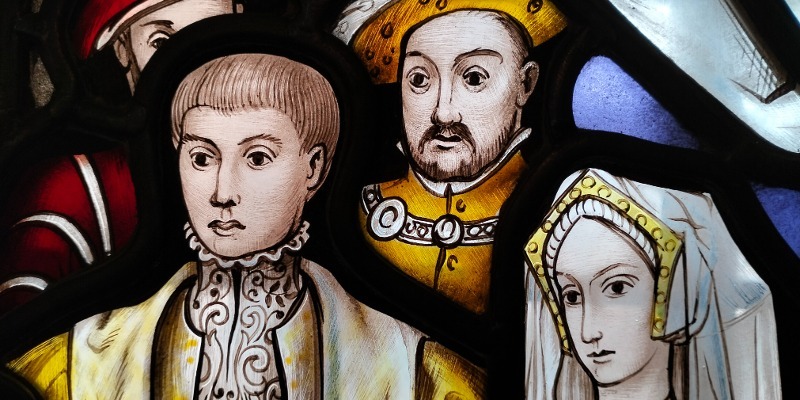
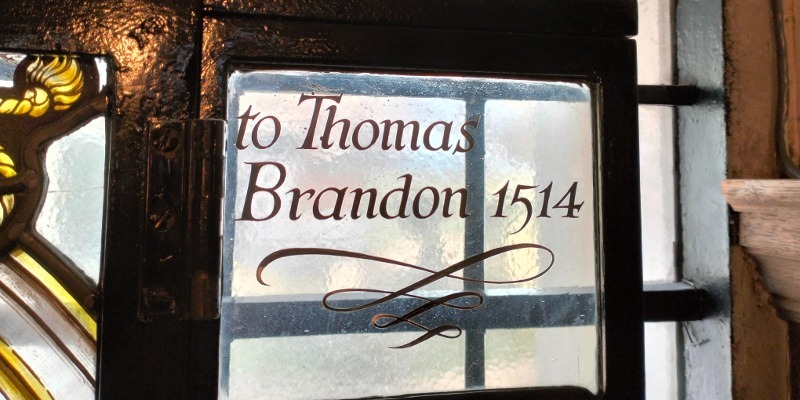
The subject of this marvellous stained glass window is the marriage of Henry VIII’s sister, Mary Tudor, to Charles Brandon, Earl of Suffolk, in 1515. In this video, our Heritage Ambassador & Tour Guide Susan Jenvey introduces us to the window's subject and to a remarkable, intelligent, brave and exceptional woman linked to the history of the site.
Watch the video here.
Madam Ab Drye
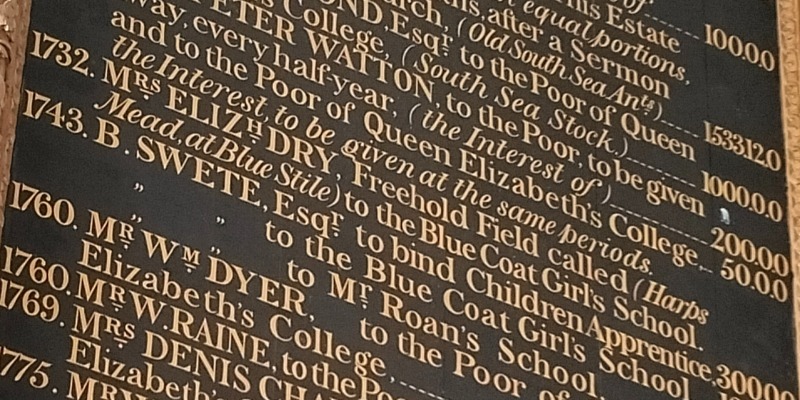
Elizabeth Mansfield married Abraham Dry (Junior) in St Nicholas Church, Deptford on 20th May 1684. Both Abraham Junior and his father were gardeners in East Greenwich. Abraham’s will was proved on 3rd September 1723. He left everything to his wife Elizabeth and there are no children mentioned. His will was translated from French so is it possible that Abraham was from a Huguenot family. Elizabeth’s name appears on the Benefactor’s Board in St Alfege Church: in 1732 she gave a freehold field called ‘Harps Mead at Blue Stile’ to Blue Coat Girls School. This was situated near Deptford Creek. Elizabeth died in 1736. She left an extensive will (15 pages!) and was clearly a wealthy woman. She requested to be buried in St Nicholas Church in the same grave as her husband and parents and asked that the grave be repaired and engraved with their names. This grave is no longer in St Nicholas graveyard.
Did you know? When Hawksmoor’s church reopened its door in 1718, parishioners were seated on allocated pews. You would find Madam Ab Drye in the South gallery.
[Thanks to
Ann Foster for sharing her research, knowledge and passion with us]
Mrs Kelsey
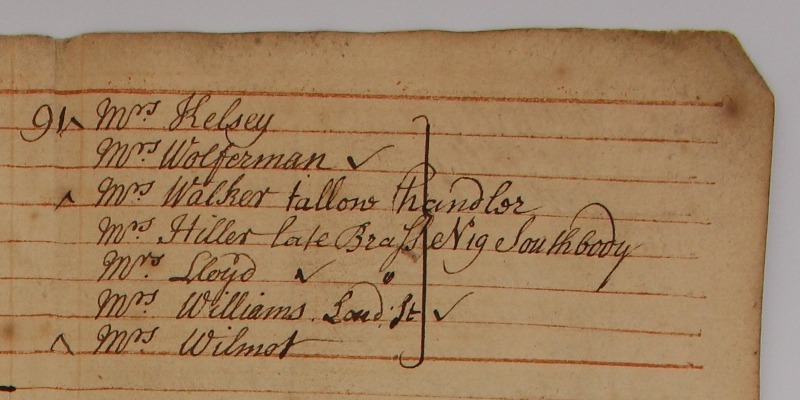
Elizabeth Dix, born about 1670 in Greenwich, was married to Henry Kelsey, explorer in Canada and Hudson’s Bay Company official. Famous as the first Englishman to have seen the buffalo, in 1684 Kelsey apprenticed to the Hudson’s Bay Company and remained there until 1722. Elizabeth and Henry married in Greenwich in 1698. The couple had two daughters and a son. Henry died in 1724 and was buried the same day at St Alfege Church. He was survived by his wife, who fell on hard times afterwards and needed help.
Did you know? When Hawksmoor’s church reopened its door in 1718, parishioners were seated on allocated pews. You would find Mrs Kelsey in the South body of the church.
Elizabeth Stirling
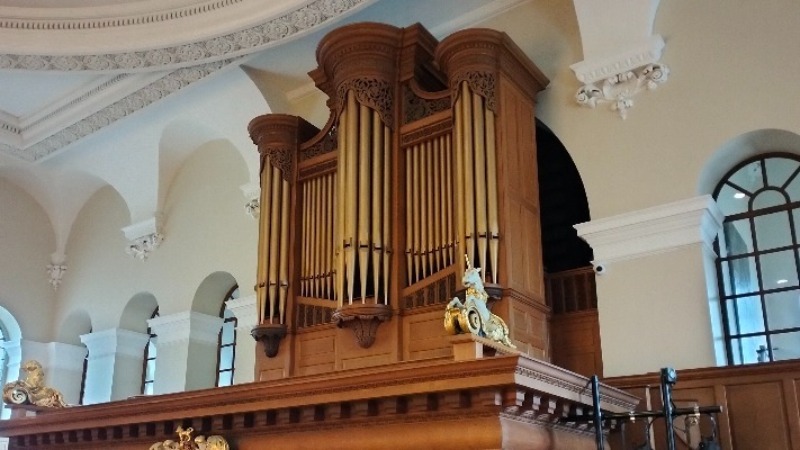
Elizabeth Stirling was baptised at St Alfege Church in 1819 and grew up in Greenwich. She studied the organ and the piano, and at 17 gave her first public organ performance in London’s Regent’s Park. Stirling became one of many female church organists of the time, and was also an excellent composer, leaving behind songs, hymns and organ arrangements when she died in 1895.
Would you like to know more?
Elizabeth Stirling and the Musical Life of Female Organists in Nineteenth-Century England by Author, Nurse Historian and Music Author Judith Barger was published in 2009.
Using the life and works of Elizabeth Stirling as a case study, this book focuses on the three roles common to female organists in nineteenth-century England: recitalist, church musician, and composer. Many rich and diverse primary sources are used to piece together a coherent picture of Stirling in each of these pursuits, as well as to present vignettes from the lives of her female colleagues. The pattern that emerges is one of both overt and covert discrimination against “lady organists” in the press, rooted in beliefs held about the proper role of women in society and of music in women’s lives. Read Chapter 2 here and delve into the lives of British Female Organists here. (Thanks to Judith Barger for sharing the contents with us).
St Alfege Church has a rich musical tradition that encompasses choir, concerts, organ and bells. Click here to know more about music at St Alfege.
Christabel Airy
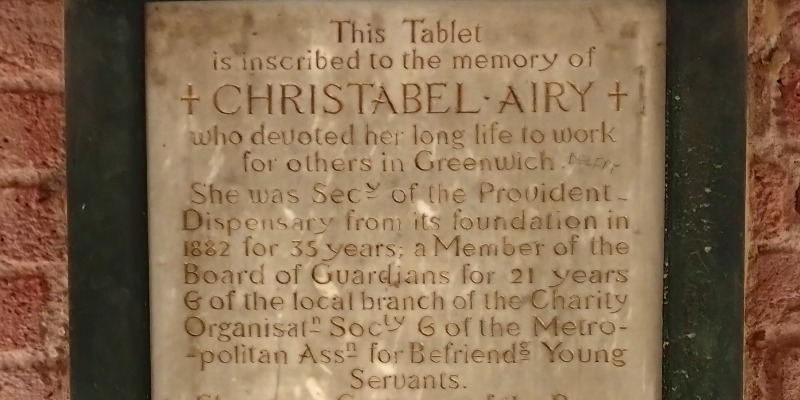
The plaque in the below image, located in the Crypt, commemorates Christabel Airy, born at the Royal Observatory in 1842 and baptised at St Alfege. Daughter of the Astronomer Royal Sir George Biddell Airy, Christabel ‘devoted her long life to work for others in Greenwich’, where she died in 1917. Alongside her impressive charitable work, Christabel was also active as one of the Bellringers at St Alfege. Women began to take up the art of bell ringing by the late 19th Century and, as more became interested, the Ladies Guild of Change Ringers was formed in 1912.
Join our popular ‘Hidden Spaces Tours’ to visit the Crypt and uncover its stories. Click here for details.
Suffragettes
In 1913, services at St Alfege Church were interrupted on several occasions by the Suffragettes. These women held protests to campaign for the right to vote. They wanted to highlight the plight of many Suffragettes who had gone on hunger strike after being arrested, but who were now force-fed. In October of that year, they gained access to the balcony and rolled out a large banner. The Suffragettes were asked to remove the banner, which they did, before unrolling it again at the end of the sermon.
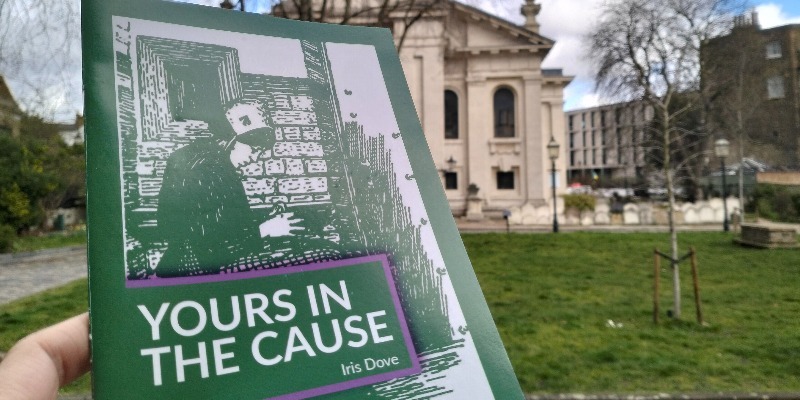
Would you like to find out more? Iris Dove’s booklet ‘Yours is the Cause: A brief account of suffragettes in Lewisham, Greenwich and Woolwich’ is available at the shop. Iris is one of our long-standing Heritage Ambassadors.
Margaret Flamsteed
Margaret Flamsteed regularly attended services here. She and her husband John lived in Greenwich after he was appointed first astronomer Royal and director of the Royal Observatory in 1675. Margaret was well educated, and assisted his astronomical work. After John’s death, she oversaw two publications of his work on stars, making her the first British woman associated with astronomy. She also funded the charitable Greenwich Blue Coat Schools for Girls.
Henrietta Wolfe
Henrietta Thompson-Wolfe was the mother of General James Wolfe who led British forces in the conquest of Quebec. Mother and son were close, and this is borne out by the content of James’s letters to his mother, which span a period from 1740 – when he received his first commission at a young age – until two weeks before his death in September 1759.
The Wolfe Family is buried in St Alfege Church. You can visit the Crypt and see their Vault during one of our popular ‘Hidden Spaces Tours’ (info here).
The Wolfe family moved to Greenwich in 1738. When James was away, Henrietta was in touch with Army colleagues who passed through Greenwich. She sent him clothing, repaired them when needed and sent him food (chocolate and her only jar of honey!). She was an active member of the community and in 1748 formed part of the Ladies Committee of the Bluecoat School (funded, among others, by Margaret Flamsteed - see above).
By 1752 the Wolfe family had bought Tile House (now McCartney House). In March 1759 Henrietta's husband Lt.-Gen. Wolfe died and, in September, James was killed. Henrietta remained at Tile House until her own death in 1764. A blue plaque commemorates General James Wolfe and the victor of Quebec.
[Thanks to Ed Katz for sharing his research, knowledge and passion with us]
Lady Morden
Lady Morden (nèe Susan Brand) was married to Sir John Morden, a successful English merchant and philanthropist who established the Morden College in Blackheath in 1695 as a home for traders who had fallen on hard times. On his death, Lady Morden became a Trustee and continued governing the alms-houses until her own death in 1721 aged 83. The Morden lived in Wricklemarsh Estate, which comprised much of the site of the present village of Blackheath. Their name lives on in pubs and streets in the area.
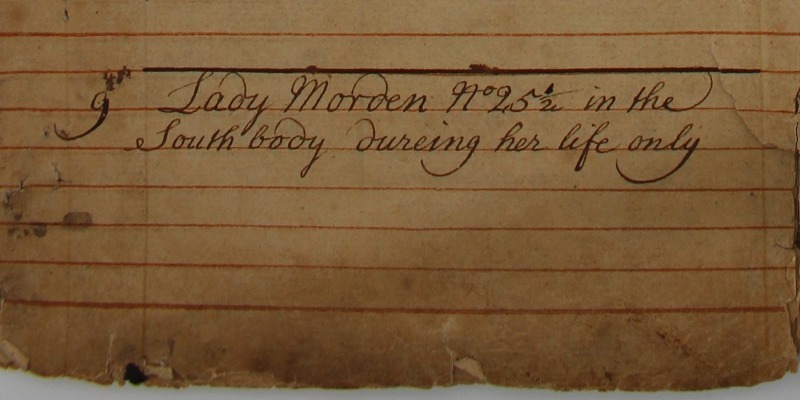
Did you know? When Hawksmoor’s church reopened its door in 1718, parishioners were seated on allocated pews. You would find Lady Morden in the south body, a place she’d be entitled ‘during her life only’.
[Thanks to
Susan Jenvey for sharing her research, knowledge and passion with us]
Matilde Martinetti, 21/02/2023